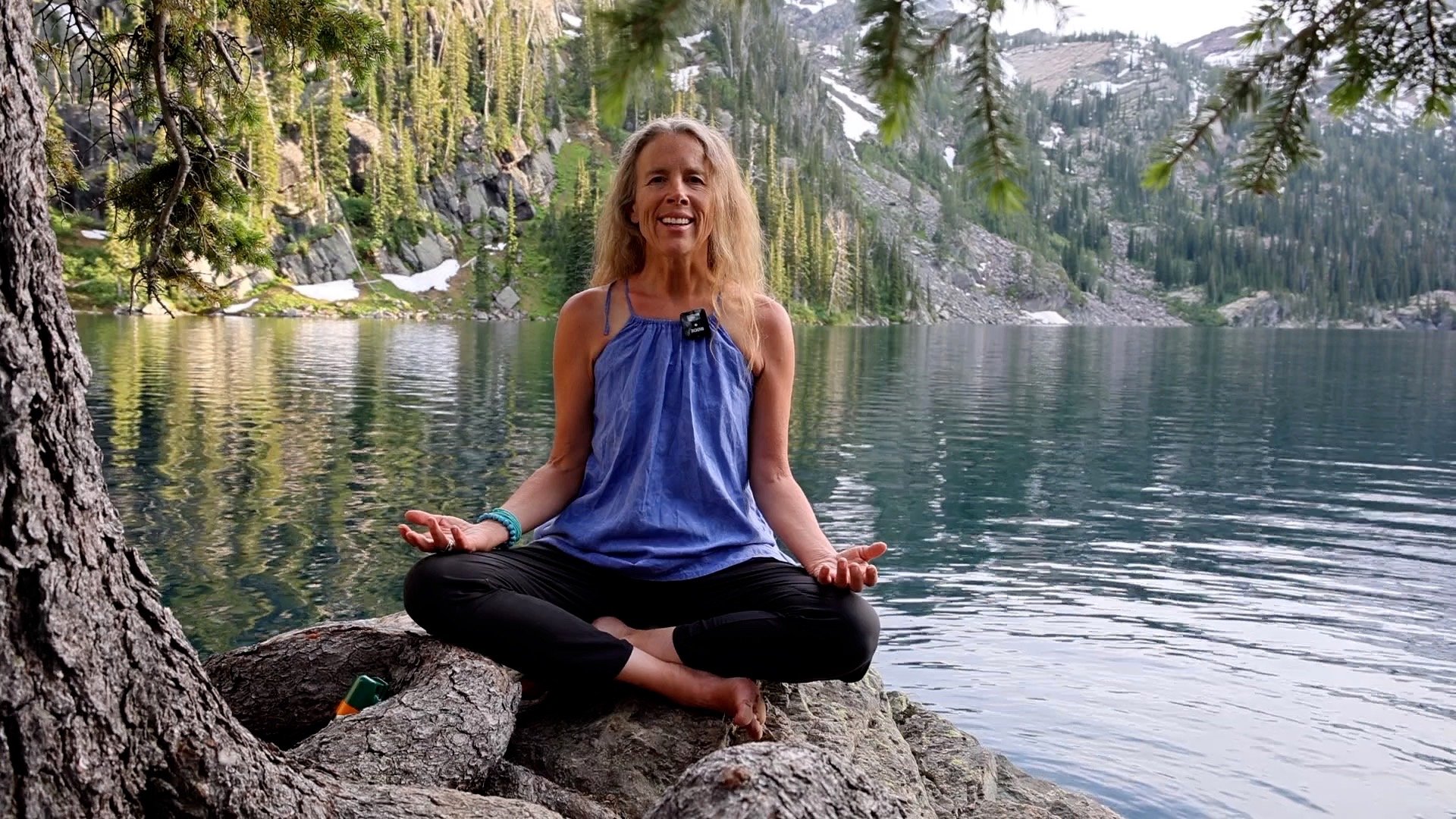
The Silence Beneath the Wind
"…I'll be willin' to be movin'."
(Willn’ • Song: Little Feat)
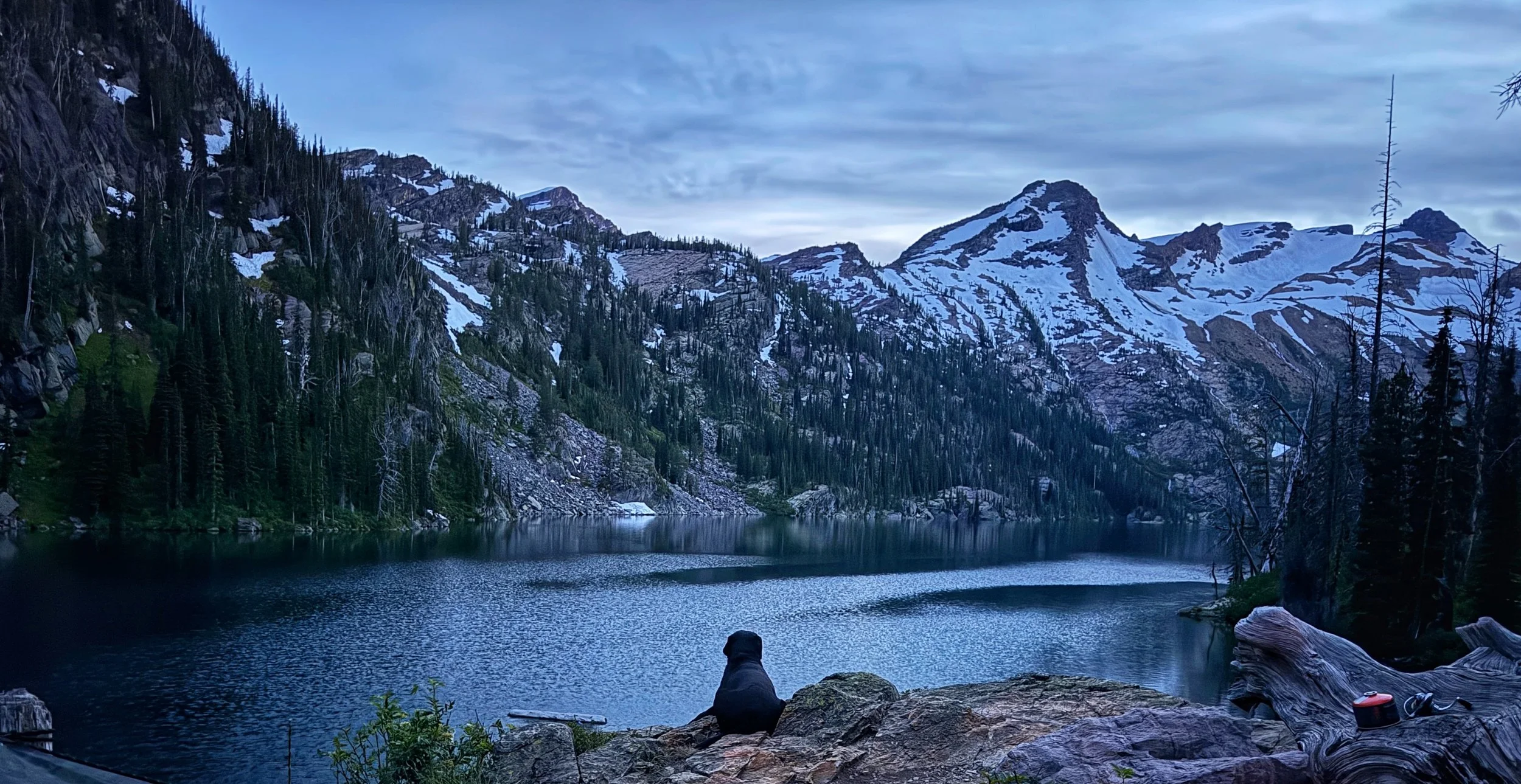
This weekend Cris, Cole, and I backpacked into the mountains of northwestern Montana to a glacial lake.
We drove deep into the backcountry, then hiked several miles to reach it — a steady climb the whole way, past wildflowers, smaller lakes, thick stands of cedar, tamarack, pine, ponderosa.
The wind moved across the peaks, through the trees, along the path. The farther we walked, the quieter everything became.
It made me think of a teaching I've been reading and returning to lately — a story from the Kagyu lineage of Tibetan Buddhism about Milarepa, the great saint and poet, meditating alone in a mountain cave.
A student came to find him there and asked what he was doing.
"Listening," Milarepa replied.
"To what?" the student asked. "There is nothing here but wind."
Milarepa sat quietly for a long time. Then he said that when he first arrived at the cave, he too heard only wind. But slowly he began hearing the silence beneath the wind. And beneath that silence, something with no name — something unborn, undying, and always present.
The student sat down without another word and stayed.
Listen.
We arrived at the lake — a jewel of the deepest, purest blue-green. The peaks above sent waterfalls cascading down from the snowfields.
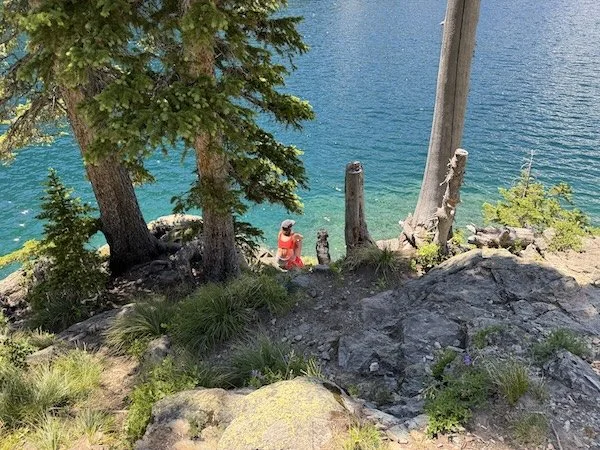
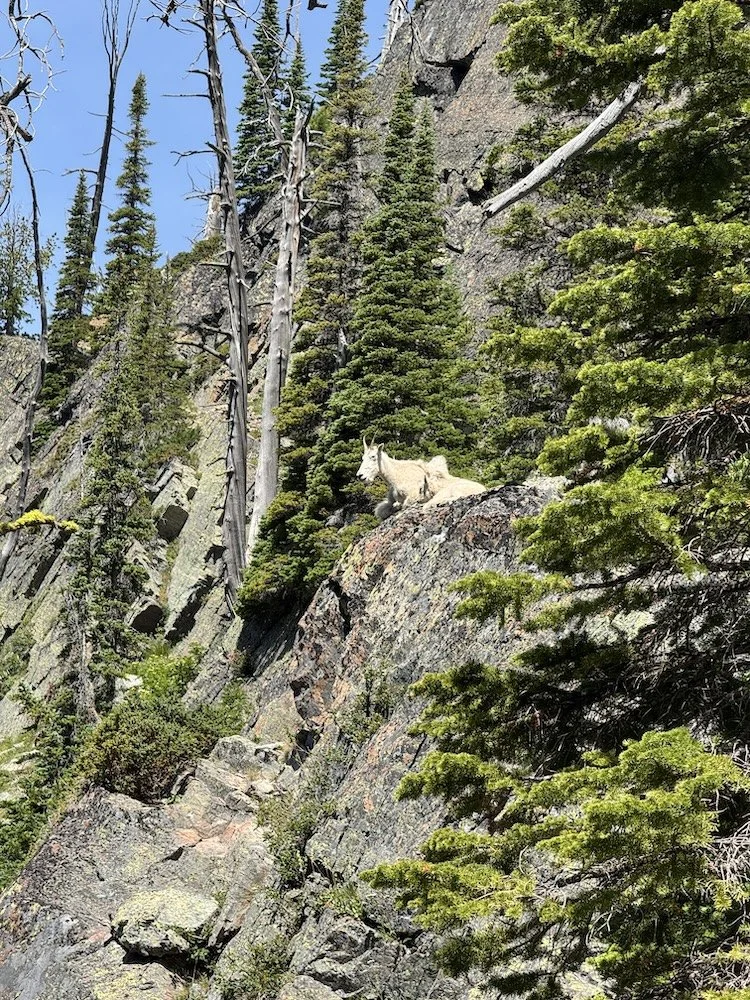
For a couple of days we did very little. We sat by the lake, watched the light change, listened to the wind in the trees, and rested. Mountain goats and their kids kept us company from the cliffs above, close enough to feel like neighbors — relaxed, happy enough to share the space with us.
I thought again about ease, enjoyment, and the work it took to get here — the drive, the climb, heavy packs, sweat. Somehow the work, the enjoyment, and the ease existed together.
It brought to mind a passage from Rudolf Steiner, translated from a 1913 lecture, on how much of humanity's suffering comes from our love of ease: "Love of ease and comfort are among the most widespread characteristics of contemporary humanity… it is only because of a love of ease" that we fail to begin the things that matter to us — small or large — and cling instead to the old, familiar ways of thinking.
I felt the truth of it — the familiar ways we limit ourselves through old beliefs, fears, and habits. Work can feel hard, and it becomes easier to wait until tomorrow… or not begin at all.
Then, reading the Upanishads, I came across a passage that offered a different angle on it: when reality is truly known — when there is silence and joy — the only thing left to do is work.
Dzogchen teachings point to the same thing: awareness is already present, whether we're sitting quietly beside a mountain lake, washing dishes, or doing our work. Effortlessness isn't the absence of activity. It's the absence of struggle with what already is.
In that recognition, there seems to be an endless well of energy available.
This is why I keep returning to the mat, to seated meditation, and to nature — and why I continue inviting others to do the same. Each has its own way of reminding us of what was never absent. Yoga, meditation, movement, and time in nature — none of it is the thing that gets us to ease. It's the practice ground where we become familiar with our natural state as what's already here. Every time we come back to the breath, back to the body, back to stillness and quiet, we are feeling into and recognizing home, our natural state of being.
And still I ask: How many moments pass us by because of fear, or tiredness, or any other I can't or not right now?
Cris, Cole, and I returned to our lives able to work and serve with a fuller heart after the hike out — refreshed, ready to go again.
STILL LISTENING
I'm nearly finished releasing the backcountry videos that go with my beginner yoga book. Here's the link to what's been released so far: [How To Begin Yoga]
And, a haiku written from the lake:
Underneath the wind,
distant waterfalls from snow—
what I hear reminds.